When you’re investing in a new kitchen or custom cabinetry, there are plenty of questions to consider: What style do you want? What finish? What hardware? How will the space function?
But there’s another question that deserves a place on the list:
Where are your cabinets actually coming from?
In today’s cabinetry market, “made in the USA,” “assembled in the USA,” and “sold by an American company” can mean very different things. Understanding the difference matters, not only because of current tariffs and changing trade requirements, but because country of origin can tell you a great deal about how a cabinet is manufactured, where its components come from, and what you’re really buying.
The American Kitchen Cabinet Alliance (AKCA) is encouraging businesses throughout the kitchen and bath industry to closely examine their sourcing practices and verify the true origin of imported products.
Why does country of origin matter? It matters for several reasons.
First, imported cabinetry can be subject to significant duties and tariffs. A 25% Section 232 tariff on certain imported kitchen cabinets and vanities took effect October 14, 2025. The current 25% rate remains in place during 2026, with a 50% rate currently scheduled for January 1, 2027, subject to any future changes.
Second, the path a cabinet takes before it arrives at your home can be surprisingly complicated.
A cabinet may be designed by an American company, sold through an American dealer, assembled or finished somewhere in the United States, and still contain significant imported components. That doesn’t necessarily make it a bad product. But it does make transparency important.
When you’re comparing cabinetry for your home, don’t be afraid to ask:
Where are these cabinets manufactured?
And then go one step further:
- Where are the cabinet boxes made?
- Where are the doors and drawer fronts made?
- Where do the components come from?
- Where is the cabinetry assembled?
- Who actually manufactures the product?
- How much of the manufacturing process happens domestically?
- What is the company’s warranty and service process?
- How transparent is the supplier about its sourcing?
Why sourcing matters to us
At our cabinet shop, we believe that homeowners deserve to understand what goes into the products they’re investing in.
Custom cabinetry is not an inexpensive purchase. It’s something you’ll use every day for years, and it plays a major role in the look, function, and longevity of your home. That’s why we believe the conversation should extend beyond “What does it cost?” It should include how it’s made, where it’s made, who is making it, and what kind of support you’ll receive after it is installed.
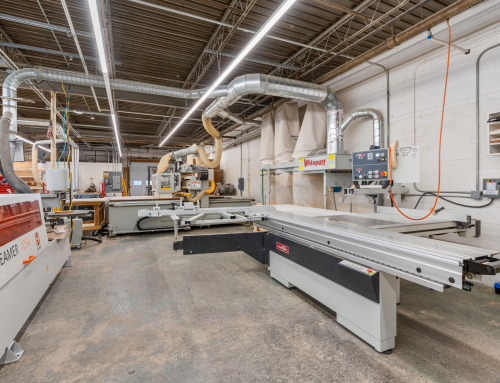
For a custom project, those details matter. It’s about more than a cabinet box. We also believe there’s something inherently valuable about working with a cabinetmaker who is close to the project. When cabinetry is designed, built, modified, finished, and installed by a team that is directly involved in the process, there is accountability at every stage. Measurements can be reviewed. Details can be refined. Unexpected conditions can be addressed. And when something needs attention, you’re not trying to figure out who is responsible somewhere halfway around the world. You’re working with the people who built it. That’s an important distinction.
The bottom line
The cabinet industry is changing, and sourcing has become a more important part of the conversation. You don’t need to become an expert in tariffs, customs regulations, or international supply chains before remodeling your kitchen. But you should know where your cabinets come from.
Ask questions. Look beyond the showroom label. Understand what “American made” or “assembled in the USA” actually means for the particular product you’re considering. And most importantly, choose a cabinetmaker or supplier who is willing to be transparent about the answer.
Because when you’re investing in your home, you deserve to know what you’re buying and who is standing behind it.